
|
|
|
|
Author Archive
Thursday, March 8th, 2012
Picture this – you are on your way home from a nice dinner and would like to enjoy your hot tub with friends that evening. But it takes at least 30 minutes for the hot tub to heat up and your friends don’t want to wait.
Sound like a problem? It doesn’t have to be with the new iAqualink control system. In this scenario you would just pull up the free app on your smart phone, program the hot tub to your desired settings, and when you get home it will be ready to use!

If you can envision similar situations where controlling your pool, spa or hot tub from a mobile phone would be convenient, read on to learn more.
iAquaLink: the next generation of pool controls – right on your mobile phone
iAquaLink allows you control your pool anytime, anywhere. Using our free app for your smart phone or web-connected device, you can control all the elements of your pool or pool/spa system, even when you’re on the go.
iAquaLink can be used on more mobile device platforms than any other pool control system.
- Free apps available for Apple® and Android® smart phones and tablets
- Mobile web-app* also available for most other smart phones, tablets and eReaders
iAquaLink is Easy & Convenient
- On the golf course or on the go, control your pool anytime, anywhere with iAquaLink
- Most intuitive and user-friendly mobile pool controller ever
- iAquaLink can be used alone, or combined with the complete line of wall-mounted or wireless AquaLink® interfaces
- User accounts can be created in minutes, used immediately, and the service is free
- Control multiple pools from a single app

Complete Control – Monitor and adjust all equipment controlled by the AquaLink system
- Pool Temperature
- Spa Temperature
- Water Falls
- Spillovers
- Laminar Jets
- Light Dimmers
- Color & White Lights
- Landscape Lights
- Filter Pump
- Booster Pump
- Pool Cleaner
- And much more
Powerful & Versatile
- iAquaLink is a robust four piece system consisting of:
- User Interface – Your smart phone, tablet, or web-connected device
- iAquaLink Service – User account provides security, customization and multi-pool control
- Web Connect Device – attaches to your pool’s automation system**
- AquaLink Automation System – Control panel that connects to your pool equipment
- Upgrades available for virtually any AquaLink®, Jandy® or Zodiac® controller ever made
- No unsightly wires, wall panels, or charging bases required
- Compatible with virtually all residential WiFi and Ethernet networks
Tags: Android, Apple, apps, AquaLink, hot tub, iAquaLink, Jandy, Louisiana, mobile web-app, New Orleans, pool Posted in AquaLink, pool equipment, pool function, pool maintenance, pool ownership | No Comments »
Thursday, November 3rd, 2011
The heat and humidity of summer is finally behind us here in southern Louisiana. But have you found that continuing to use your pool during the cooler months of fall and winter runs up a high power or gas bill that you would rather avoid?
If so you are not alone. But don’t let the threat of a high power bill scare you as this month, Pleasure Pools has some great advice on how to economically heat your pool – so you can enjoy your pool year round instead of just in the summer!
Pool heating basics
The primary cause of heat loss in a swimming pool is evaporation. The steam that you see rising off the pool during cool weather is the heat escaping your pool to the atmosphere and is the primary factor in your pool cooling off faster than you would like.
 Source: EnergySavers.gov
The rate of heat escape is a function of a few things, but most importantly it depends on the atmospheric temperature, humidity levels and size of your pool. A good example to think of is like a hot cup of tea or coffee. The larger the volume and smaller the surface area, the longer it takes for the beverage to cool off.
Maintenance check
The amount of time (and energy) it takes to heat your pool will depend on the type of equipment you have, as well as the BTU power of the pump and factors discussed above. If you have an Aqualink pump, it will automatically activate when it gets to 34°. This protects the pumps and piping.
However, if you have a different model, there is a good chance it may run continuously trying to maintain temperature. This can be determined by a free pool heater inspection.
The secret – a solar cover (or pool blanket)
 Photo: Outofsightpoolblankets.com
OK we promised you a secret for heating your pool without emptying your wallet and here it is – a simple solar cover (or pool blanket). Pool blankets are inexpensive (many available under $150) and are made of durable resin material. They place a simple cover on your pool that can be quickly and easily deployed or rolled up and put away.
A solar cover can reduce your pool heating expense down to about $1 per day by taking advantage of the greenhouse effect. They trap the heat from escaping into the atmosphere and keep it in your pool – cutting evaporation of heat by as much as 95%. As an added bonus, it can also keep leaves and dirt out of the pool when not in use as well.
Tags: breaking bank, heat, Heating, Louisiana, maintenance, Pleasure Pools, pool, pool blanket, solar cover Posted in New Orleans, pool maintenance, pool versatility, pool water | No Comments »
Friday, September 2nd, 2011
Over the years, the lap pool has proven to be one of the most popular choices for pool designs . The lap pool is designed to provide enough space to swim a lap. The design is long and narrow, allowing it to fit into almost any location.
There are several considerations we recommend when choosing a design for a lap pool for your home.
Location & size requirements
Location is the most important factor to consider when choosing a lap pool as it needs to be located in an area that will allow a stable, flat surface. The typical dimension for a lap pool is 25 yards long with a width that can vary depending on your needs. The depth should be between 4 and 5 feet.
If you’re training for a high level swim meet, the standard size pool that you will find at a gym or country club is Olympic size, or 50 meters (164 feet) long and 25 meters (82 feet) wide. These pools are large enough for eight racing lanes. Other meets may use Junior Olympic standards of 25 feet. Since most people don’t have the room for this large sized pool in their yards, you can choose a lap pool that is 15 meters long and one, two or three lanes in width.
Other considerations
Lap pools seem like they may be a bit inflexible when it comes to simply using them for recreation, but with a little thought they can actually be quite versatile. A few things you can do to customize the pool for greater enjoyment include:
- Choose an “L” shaped pool if you’d like to add a small extra area for recreational swimming.
- If you plan on using the pool for both laps and recreation, you’ll do best to create a sloping side to allow for a slightly shallower end.
Making your choice
A combination lap pool and recreational pool is possibly the best option for those with varied interests. Choosing a combo pool allows you to use the pool for other functions and it also is more appealing when reselling your home. Always think about the main use that you’ll have for the pool before you make a decision on the exact size and dimensions.
Tags: depth, enjoyment, inflexilble, interests, location, number of lanes, pool size, recreation, standard, typical dimension, width Posted in customized pools, lap pool, pool comparisons, pool construction, pool depth, pool designs, pool dimension, pool function, pool versatility, recreational pool, recreational swimming | No Comments »
Friday, August 26th, 2011
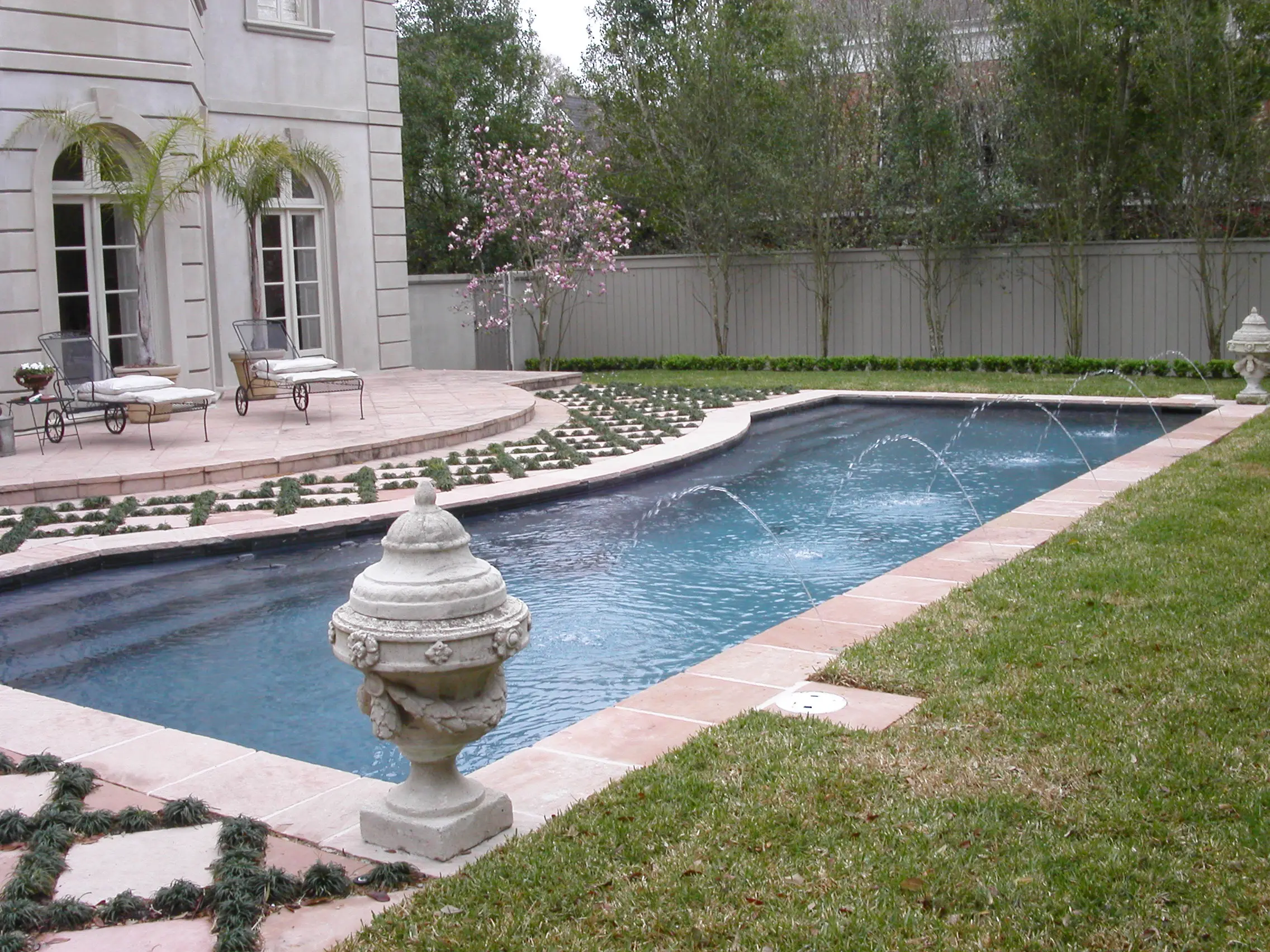
Choosing a pool design is something of a matter of style and taste, but there are also functional considerations as well which is one of the reasons geometric pools remain so popular. Geometric pools range in size and design and the main thing that most have in common is their sharp corners. The most common geometric pool is the rectangle.
Rectangular Shape
Everyone knows the rectangular shape and it has proven very functional for designing and building enjoyable swimming pools .This is the easiest shape to make and the most conducive to popular exercise such as swimming laps. When pool builders first came about and began building in-ground swimming pools, they were almost all rectangular. But the big boom of swimming pools happened after World War II when stars and celebrities began building new, large, modern homes with big swimming pools in the yards.
Functional Considerations
Geometric pools may actually be easier to maintain than those that are irregularly shaped. The simple shape lends itself to easy cleaning because you can get the vacuum and other cleaning tools into the corners and edges easily. This type of pool design also lends itself to creating a shallow end and a deep end and makes it possible to set up a diving board if you like.
Most people like to build deck areas around their pools and geometric pools easily lend themselves to these structures that can create a balanced pool area.
Modern variations
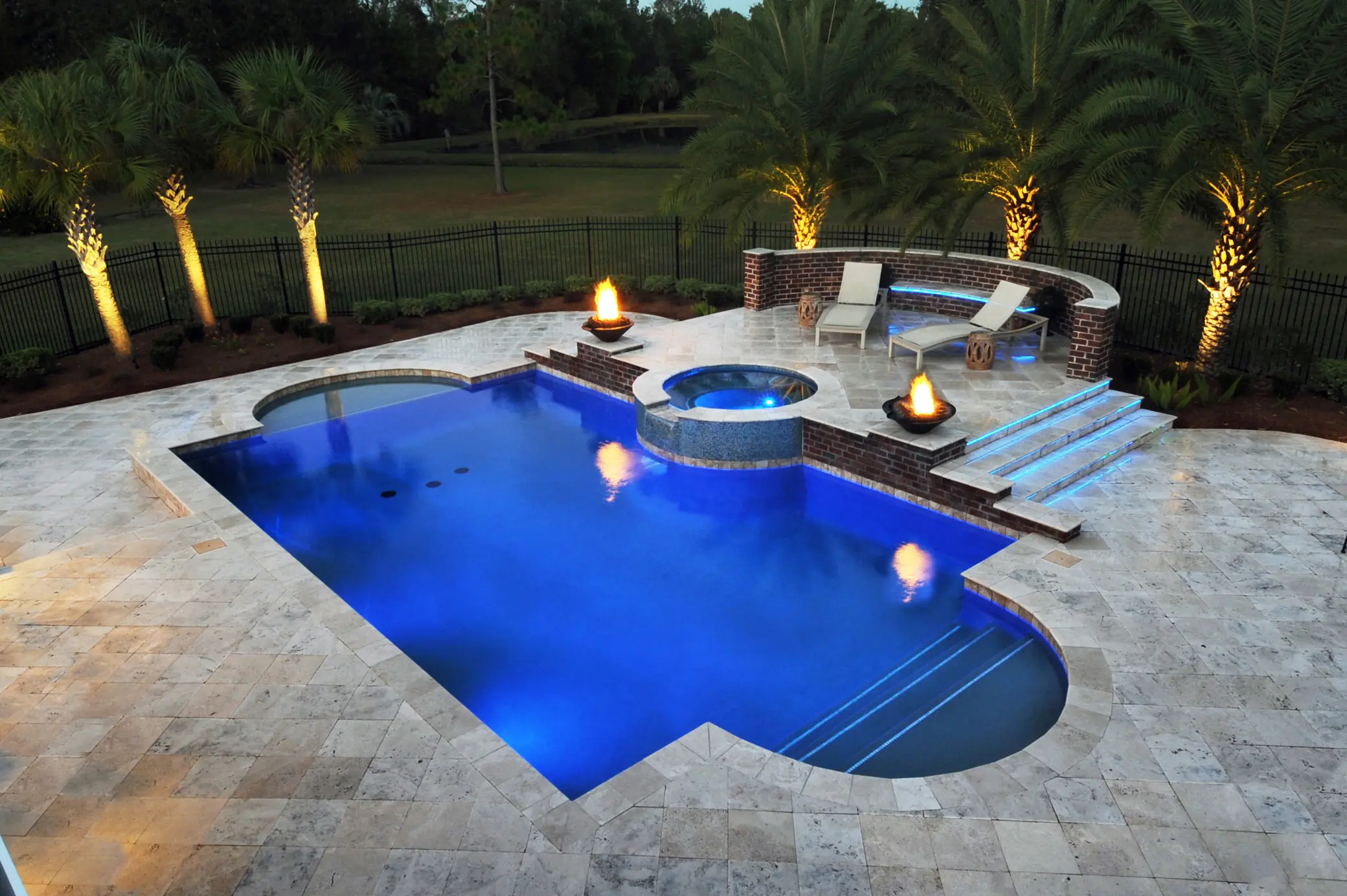
Modern geometric pool designs include many versions of squares, rectangles and other shapes. Additionally, if you’re considering attaching a hot tub to your pool, the geometric design works well for this combination. This style pool has a very crisp and clean look because of the sharp corners.
The new zero-entry pools are most typically rectangular in shape. These offer gradual deepening as a way to wade into the pool for a very nice beach-like experience and are great for small children and adults alike.
Tags: diving board, exercise, functional, geometric design, pool size, swimming pool Posted in New Orleans, pool builder, pool construction, pool contractors, pool designs, pool function, pool maintenance, vacuum | No Comments »
Friday, August 5th, 2011
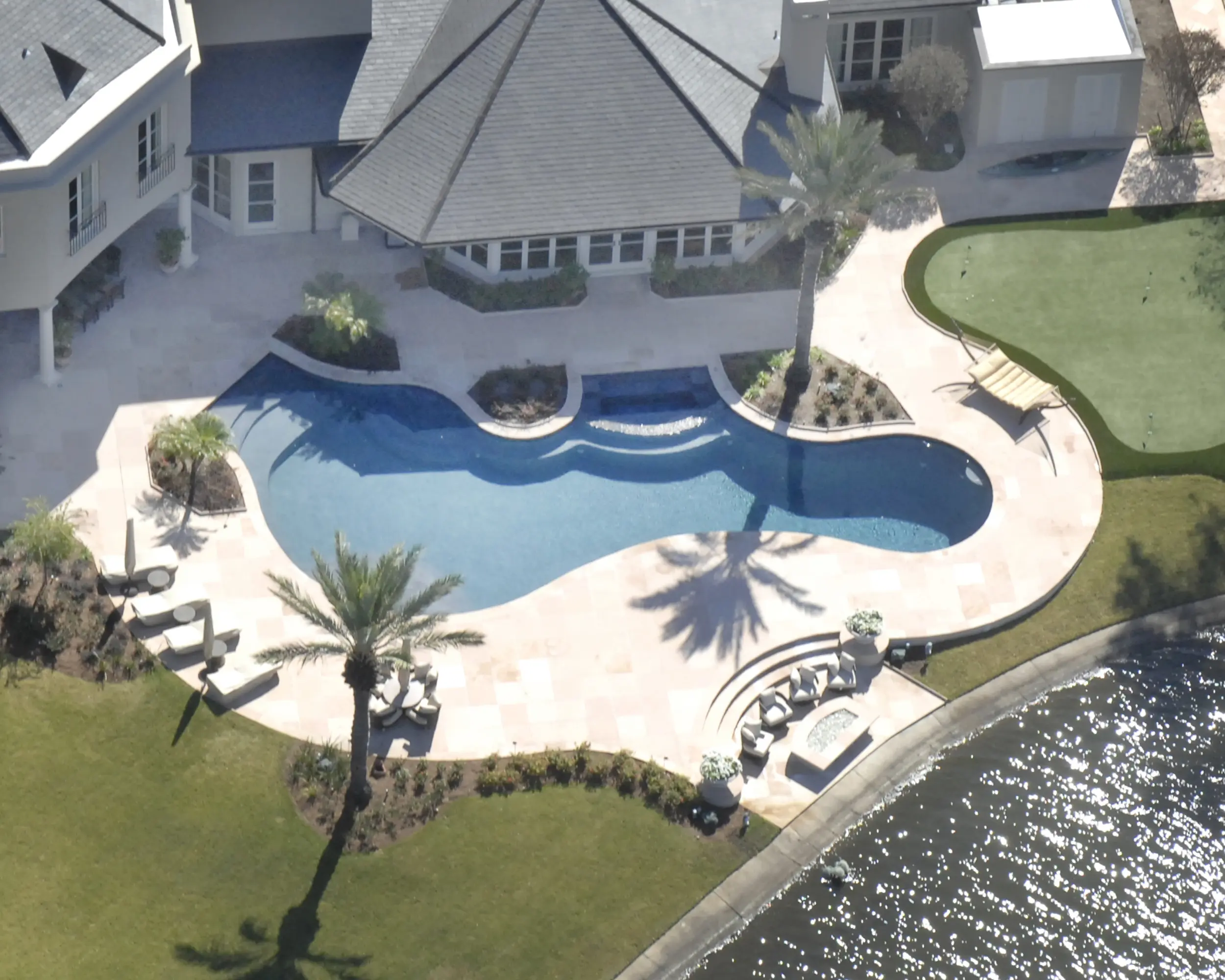
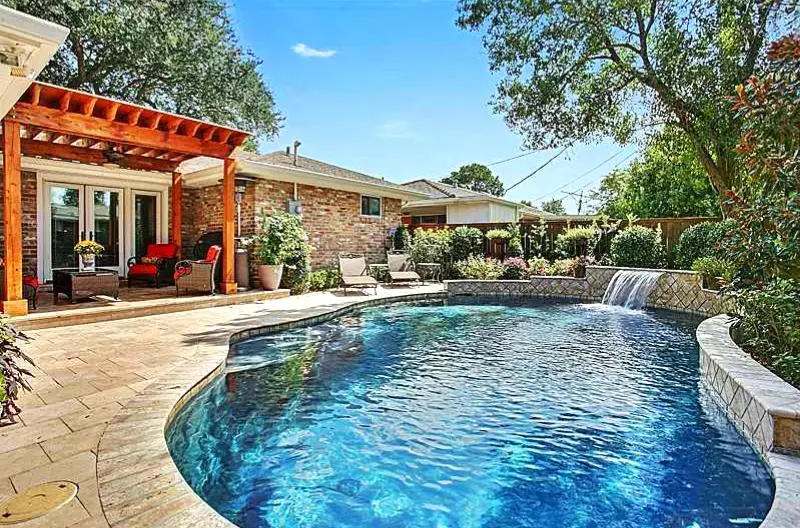
For years, swimming pools have been made in rectangular shapes, but in the last twenty years, there has been an explosion in the number of freeform pools. Having the ability to build a pool in any shape or size has given pool builders and homeowners the freedom to express their creativity like never before.
Background
Most likely the beginning of the freeform pool concept began with a kidney shaped pool designed by landscape architect, Thomas Church, back in 1948. It was created for a newly designed modern family home in California.
After WWII the popularity of home swimming pools really began to take off. Most of the pools at the time were in California, with many of them being built by wealthy celebrities. As people began to build more elaborate and modern homes, the desire for more interesting pool shapes also grew.
Benefits of a freeform pool
Today, freeform pools are among the most requested pools we build. One of the reasons is that the freeform design fits into the landscaping of the yard. Rather than a stark, rectangular shape in the yard, you can opt for a pool in any shape or design that you like.
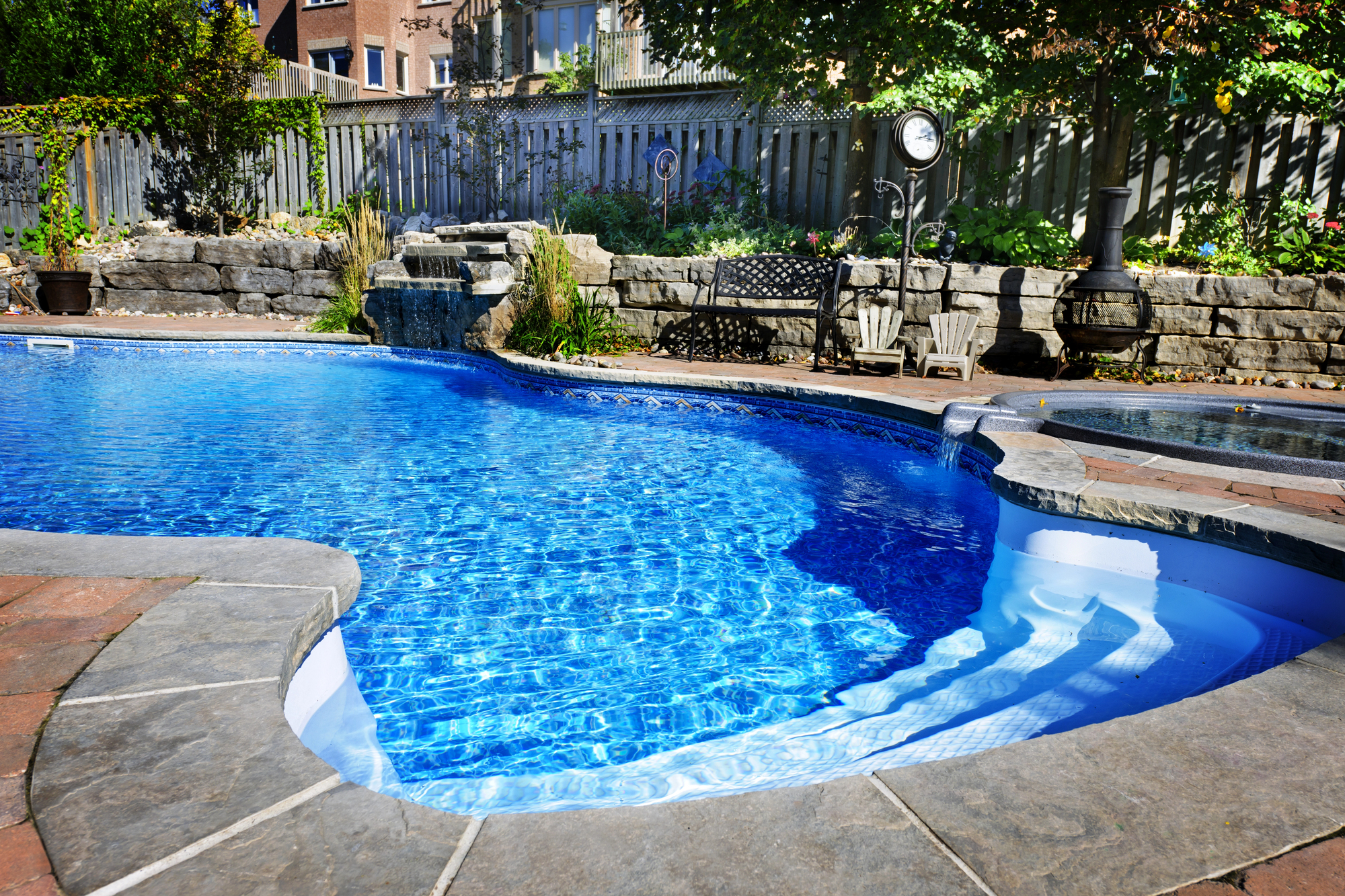
The best freeform pools are designed to fit in with their surroundings perfectly. They seem to blend seamlessly into the landscape and create a very serene and beautiful look to the setting. They can even incorporate fountains and waterfalls, making them look almost as if they have always been there.
One of the beautiful options of freeform pools is the ability to keep them flowing and trailing through the landscape. You can make different sections that are designed for different uses. You’ll also be able to choose the look of the pool by the way you paint the bottom. Dark-bottom pools look more like real ponds, yet they can be beautiful and elegant. Choosing a dark bottom also helps because it doesn’t show the dirt as quickly as pools that are painted white.
Most freeform pools are made into unique designs but that doesn’t mean you have to start from scratch. Some pool owners may opt to use a pre-formed design but of course you may choose to design your own look.
Tags: benefits of freeform pools, creativity, elegant, freeform pool concepts, landscape, pool size, pool's color, pool's shape, unique designs Posted in California, freeform pools, pool companies, pool construction, pool contractors, pool homeowners | No Comments »
|
| |
|